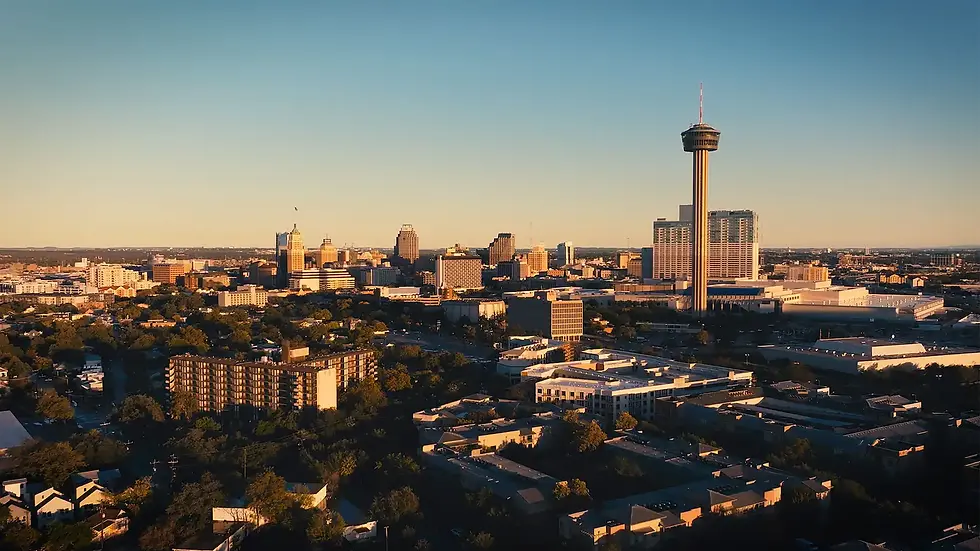
San Antonio isn't Austin, yet, people are starting to feel the pressure.
- Briana Moseley
- May 28
- 8 min read

You can feel it during your commute.
What used to be a 15-20 minute drive now turns into 40 minute. Back roads that used to remain quiet are now buzzing with new construction. Rent is increasing and even long term residents are realizing they may not be able to afford their home in the coming years.
San Antonio still has its unique charm and still feels different from Austin. However, for many people, it no longer feels like the 'small town big city'. The city is growing rapidly with new people arriving constantly. With new people comes new ideas, new businesses, and new developers pushing into every nook and cranny the city has to offer. While growth brings new opportunity, it also brings pressure.
The type of pressure isn't just financial, but also emotional.
Beneath the conversations about traffic, development, and housing is a question many residents are beginning to wonder:
Can San Antonio sustain this level of growth without losing the very nature that made people love it in the first place?
Old School San Antonio

Before the endless construction zones, San Antonio felt different. It was a city that felt big enough to grow in, but still small enough to be comfortable.
People can still remember when going across town never meant checking a traffic app first to ensure you could get there on time. There are still memories of neighborhoods feeling stable where families could purchase a home near where they grew up. Now families are moving farther and farther away from one another.
San Antonio was never the flashiest, the loudest, or the one on the scene, but it was a city built on simplicity that met the needs of its residents. This was part of the identity of the town.
There were military families outside grilling on weekends. Churches gathering and showing up for the community where many packed parks with lawn chairs and potluck style foods. Where the Spurs weren't just a basketball team, they were accessible to our youth and gave hope to them. It was grandchildren, parents, and grandparents all residing within 20 minutes of one another. A city where you got a chance to know your neighbors through years of shared experiences. For many, San Antonio felt like a solid foundation.
Austin is where people chased trends. Whereas San Antonio felt like a warm hug from a close friend.
The city still grew, but the growth mingled with the working-class spirit. Teachers, nurses, small business owners, first responders, tradesman, and military families could build a decent life without being crushed by the rising cost of living. Neighborhood restaurants would last generations and serve both the locals and tourists. Even downtown, exceptionally well preserved, held a connection with the city.
Most importantly, asking an outsider about San Antonio would produce a description of "slow". Not slow in the sense of intelligence, or laziness, but slow in the sense of having room to breathe and be human. That version still exists in pieces across town, in older neighborhoods, local bakeries, small taquerias, Friday night lights, and family-owned businesses. However, the wave of the times are proving to chase after the remnants of the Old San Antonio. It isn't happening overnight and not all at once.
It is happening just enough for residents to notice.
The Numbers Behind the Change

The feeling that San Antonio is changing is not just a perceptual observation, there are numbers to show it.
Over the last decade, San Antonio has become one of the fastest growing major cities in the country. According to the U.S. Census Data, the San Antonio-New Braunfels metro area added over 205,000 residents between 2020-2024, bringing the regional population close to 2.8 million people. This kind of growth cannot be missed and changes a city. New residents are drawn to the city through military opportunities, expanding industries, and housing costs that appear to be more affordable than other major cities across the United States. The downside is as growth accelerates, long term residents no longer feel as secure as before.
Housing is one of the clearer pictures to view as an example. Areas that were once affordable for the working class have increased in home prices, rent, and property taxes. According to the U.S Federal Housing Finance Agency, an average home cost in San Antonio between 1990 and the early 2000s ranged from about $90,000-$110,000. Fast forward 2020-2026, those same types of homes are worth about $250,000-$330,000. For a modest two bedroom apartment in the 1990s, rent averaged around $465-$760. Now, a studio apartment cost more than the average 2 bedroom apartment in the 90s, coming in at about $800-$985. However, that has not stopped developers for continuing to push suburbia even outside the city limits.
At the same time, wages have not always kept up with the rising cost of living. Recent reporting shows San Antonio's median household income rising moderately, however many residents still continue to feel the strain of housing, groceries, utilities, childcare and transportation costs.

The roads, originally designed for the smaller city, are now carrying the weight of rapid expansion. So much so, that the city is going through years of construction to keep up with the growing demands. Areas like 1604, Alamo Ranch, I-35, and others have become symbolic of frustration and marking the cities stuffiness. There are more businesses, more development, and also longer commute times with heavy congestions.
Residents report spending nearly an hour just to drive what should be a short trip during peak traffic times. As opportunities move across town the commutes seem to get longer just to make a paycheck.
There is also the rise of apartment complexes, warehouses, commercial developments, and master planned communities spreading quickly into every inch of the city. According to the Austin-San Antonio Corridor Council, Austin-San Antonio is one of the fastest growing regions in the United States and contributing to a steady increase in traffic on I-35. For some, this represents progress, but for others, this feels like a pressure that the city cannot contain. Beneath all of these numbers lies a reality that San Antonio is no longer the affordable city people once believed it to be.
Why People Feel the Pressure

The pressure surrounding San Antonio's growth isn't just about the traffic, the constant state of construction, or the development. It is about what these things represent for the city's identity. For many residents, the pressure is about watching the familiar parts of the city change faster than you expect. Neighborhood restaurants close, chain stores arrive, and luxury is put above affordability. Roads that once served as a calm commute stay crowded from morning until night.
All the while, people are wondering who the growth is actually for. As a young family tries to purchase their first home, they may get priced out of the same neighborhoods they have grown up in. At one time, a family could thrive on a single income. Renters aren't able to renew their leases as renewal prices jump above the rise of wages. Long term homeowners deal with the ever increasing property taxes that make buying a home and staying there for 30 years more difficult.
However, at the same time many residents welcome the growth and do not want it to stop. They enjoy the new restaurants, jobs, entertainment, economic growth, and new projects happening across the city. These residents want San Antonio to thrive by promoting more opportunities for their children.
This makes the conversation complicated. The pressure isn't coming from the change alone.
A 2023 Pew Research Center study found that across the country, Americans are increasingly feeling more and more disconnected from their communities as development, affordability, and societal division are reshaping their identity. The study focused on national measures but the emotional patterns can be found in the Countdown City. In San Antonio, this feeling centers around the changing culture and pace of the city. The city is at a cross road between being slower, more family-centered, and community-driven to endless traffic, luxury development, and rising costs.
San Antonio is still more affordable than Austin and the economy is tied to more than one industry. The culture of the city is still anchored in multigenerational roots, faith, heritage and military, but still residents who welcome the growth can admit the city feels different now. This feeling is becoming harder to ignore.
The Comparison

Austin is one of the fastest growing tech-cities in America. Austin's city has exploded with rising home prices, taxes, and culture. However, San Antonio being just a short drive from the booming city remained desirable as it compared with a slower pace, affordability, and different culture. People could visit Austin on the weekends and holidays but still feel the difference when going back home to San Antonio.
However, that contrast may feel less clear than before.
As the growth of this corridor continues to rise, many are left wondering if San Antonio is falling into the same path Austin took years before. The differences are becoming harder to distinguish as housing prices climb, traffic congestion worsens, developers continue to expand into rural areas, national companies build headquarters, and entire sections of the city are being overdeveloped.
Project Marvel is a clear mark of these major changes.
Texas Standard reports that the Austin-San Antonio corridor is viewed by economists as a potential "megaregion" where developers are projecting millions of new residents to enter in the coming decade. For some, this sounds exciting, but for others this feels like a warning. Austin, as a city, has experienced major economic growth, but it has also created some of the highest home prices in Texas. According to Redfin, median home prices have skyrocketed in the last decade which has resulted in many residents being priced out of their own neighborhoods. One resident was forced to sell her home and move to San Antonio with the hopes of sustaining an ideal lifestyle.
For San Antonio residents, there is a fear that this model will have them facing similar pressures if the growth continues without enough attention to affordability, infrastructure, and preservation to the city's culture. The question then shifts from whether San Antonio should grow because the growth is already happening. The real question is whether San Antonio can grow without losing the essence of the city.
What can we do better?
For starters, win the NBA championship. Go Spurs Go!
In all seriousness, San Antonio is standing at a unique middle ground that feels uncomfortable. The city isn't some town that many overlook anymore. It also isn't a major metropolis filled with high urban growth. Right now, it sits somewhere in the middle and in that middle realm is where the city's future will be defined. The next decade will determine the balance of San Antonio and either rewrite the culture or maintain it even in the growth.
This is about growth vs. affordability, development vs. identity, and opportunities vs. stability.
Growth by itself is not the issue as most resident understand a city has to evolve. People move, economies change, and things like housing and infrastructure will grow with the change in population. However, the real concern is whether residents will still feel as if they belong in the city being built around them. Will teachers, first-responders, military families, and working-class residents afford homes near the communities they serve? Will businesses survive continued large scale development? Will legacy neighborhoods maintain their identity as investors pour into those regions (everything near downtown)?
These are the questions that are urgently growing in people's minds as city leaders continue to make decisions. Is the city equipped to handle this growth and will it put a strain on city resources over time? As housing prices increase residents continue to be displaced from their homes leading to a rise in becoming houseless. Reporter Avery Everett reported on KSAT12 news last year that San Antonio is the second highest ranked in homeless population. According to the Point-In-Time report, the city has between 3,300-3,600 individuals who are homeless. This is not by accident, but a high cost of city development. When the average person can no longer afford to live in a home, there is an issue that city leaders cannot continue to ignore. Should the trade-off remain the same all for the sake of growth?
The identity of San Antonio hasn't disappeared, yet. However, many residents are finding out this essence is worth protecting if the city should remain sustainable for the decades that follow. Residents want to visit their local bakery before sunrise, smell fresh treats wafting in the dewey air, see local artists' work honoring the Spurs and others along murals, get together in the park with their multigenerational family, see families plant roots, and survive the tidal wave of pressure coming from across Texas and nationally.
San Antonio is not Austin. At least not yet.
Can the city continue to grow without losing all the parts of what makes it special to say, "I'm from San Antonio"?









Living in Big major cities myself from New York to Los Angelas Once san antonio brings in new Major fortune 500 companies, thats what it will be known for like how Austin went from home of hippies and now a massive tech metropolis.